
A beloved face of British television has left us — and the world of comedy will never be quite the same again.
For generations, her sharp wit and unforgettable voice filled living rooms across the country. She was the heart of one of the most iconic sitcoms ever made — a show that redefined British humor and still makes audiences laugh decades later.
Fans around the world are now mourning the loss of the woman who turned a single role into television history. Her performances, her timing, her charm — all became part of what made that series timeless.
Only now has it been confirmed that the actress behind Sybil Fawlty — Prunella Scales — has passed away at the age of 93.
Her family shared that she died peacefully at home in London, surrounded by love, according to BBC.
“Our darling mother Prunella Scales died peacefully at home in London yesterday. She was 93,” her sons Samuel and Joseph said in a statement. “Although dementia forced her retirement from a remarkable acting career of nearly 70 years, she continued to live at home.”
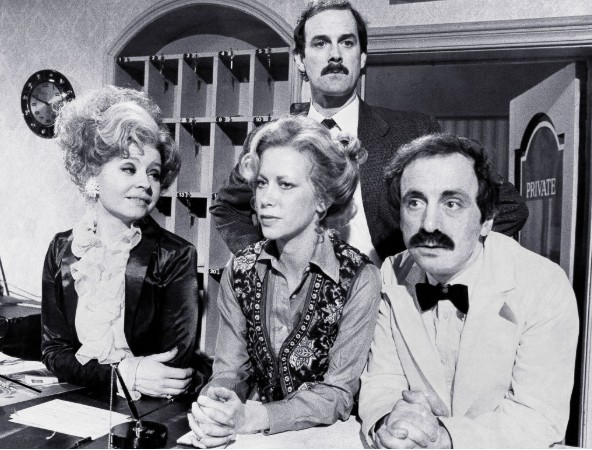
They revealed that, in a touching coincidence, she had been watching Fawlty Towers the day before she passed.
Scales had been diagnosed with vascular dementia in 2013 — a cruel condition that slowly distanced her from the public eye but never from the affection of her fans. Those closest to her noticed the first signs back in 2003, when she began struggling to remember her lines on stage.
Her husband, veteran actor Timothy West, passed away in November of last year. The couple’s six-decade marriage was one of British theatre’s great love stories. Together they raised two sons, a stepdaughter, seven grandchildren, and four great-grandchildren.
Her family added, “We would like to thank all those who gave Pru such wonderful care at the end of her life. Her last days were comfortable, contented, and surrounded by love.”
Over a career that spanned nearly seventy years, Scales became one of Britain’s most cherished comic actresses. Her first major success came with The Marriage Lines (1961–66), where she starred alongside Richard Briers. But it was Fawlty Towers that made her an icon.
Playing the sharp-tongued Sybil opposite John Cleese’s bumbling Basil, Scales crafted a character who was equal parts commanding and hilarious. Her perfectly timed “BASIL!” became one of the most recognizable moments in British TV history.
Standing just 5-foot-3 beside Cleese’s towering 6-foot-5 frame, she could silence him — and an entire audience — with one glare. Cleese’s Basil often described Sybil as “the dragon,” “my little piranha fish,” or “my nest of vipers,” but audiences adored her.
Reflecting years later, Scales said, “I feel very grateful for Sybil. Fawlty Towers was very hard to make, but it was very stimulating.”
Outside of comedy, Scales demonstrated remarkable range — earning a BAFTA nomination for her portrayal of Queen Elizabeth II in Alan Bennett’s A Question of Attribution (1991).
Later in life, she and her husband captured hearts once again with Great Canal Journeys, a Channel 4 series where the couple traveled Britain’s waterways while reflecting on love, aging, and the realities of dementia.
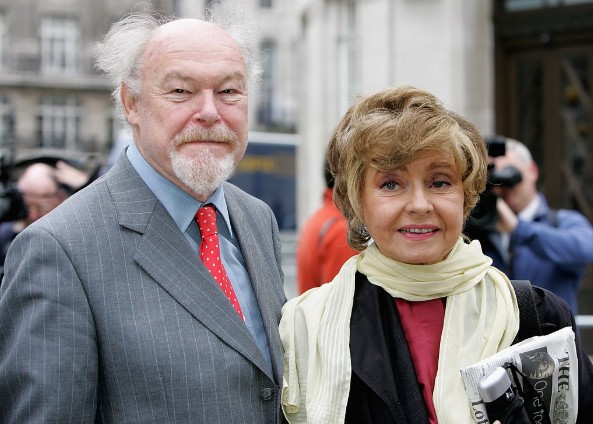
Timothy West once said, “We didn’t start out thinking it was going to be an especially exciting performance for people to watch, but for ten series, we made canals captivating. We were good at it.”
Their gentle partnership on-screen became a national symbol of love and resilience. The Guardian even called it “one of the greatest love stories on TV.”
Since her passing, tributes have poured in. Broadcaster Gyles Brandreth called her “a funny, intelligent, interesting, gifted human being.” BBC comedy director Jon Petrie said, “She was a national treasure whose brilliance as Sybil Fawlty lit up screens and still makes us laugh today.”
Corinne Mills of Alzheimer’s Society praised Scales not only for her talent but for her openness about dementia:
“Prunella was an inspiration not just for her achievements on screen, but because she spoke so openly about living with dementia, shining an important light on the UK’s biggest killer.”